Roof repair
Roof repair or replacement? How to decide without getting sold
A working roofer's rules for when a repair is money well spent and when it is money down the drain, with the questions to ask before you decide.
By Josh Fox, Fox Gables Construction · September 21, 2026 · 8 min read
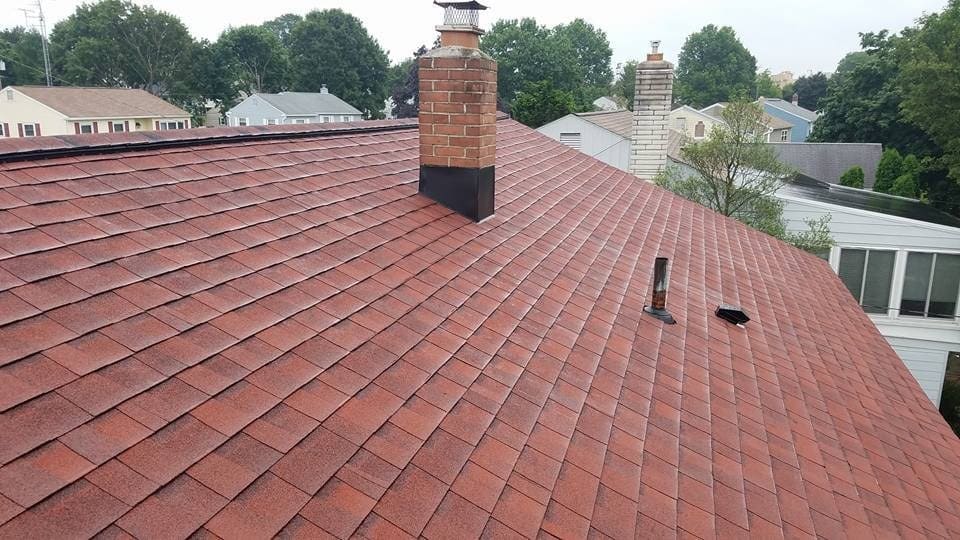
Every week someone calls with a leak and the question underneath the call is the same: do I need a new roof, or can this be fixed? The answer is usually clear once someone has actually been on the roof and in the attic. The problem is that a lot of homeowners get the answer from the driveway, from a salesperson whose commission depends on it being "replace."
Here is how I think about it. These are the rules I use when I quote, and they are the rules I would want a roofer to use on my own house.
Start with what is actually leaking
Most leaks are not shingle failures. They are flashing failures. Water gets in at the chimney, at a plumbing vent whose rubber boot has cracked, at a skylight, in a valley, or where a porch roof meets the wall. The shingles around those spots can be perfectly good. A roof with a leak at the chimney and 15 years of life left in the shingles needs its chimney flashed, not replaced.
So the first question is not "how old is the roof" but "where is the water coming from." That takes an attic visit with a flashlight and a walk on the roof. If a contractor quotes you a replacement without doing either, get another opinion.
The repair rules
A repair makes sense when all of these are true:
- The problem is in one place, or a few places, not everywhere.
- The shingles around it are still flexible and have their granules. Lift a corner on a warm day; if it bends, it has life. If it cracks, it does not.
- The deck under the leak is sound or needs only a small patch.
- The roof is under about 18 years old, or it is older but was installed well and the rest of it looks good.
- The repair costs less than about a third of what a replacement would.
Typical repairs and what they run around here:
| Repair | Typical cost |
|---|---|
| Pipe boot replacement | $250 to $450 |
| Missing or wind-damaged shingles, one area | $350 to $900 |
| Chimney re-flashing | $650 to $1,600 |
| Skylight re-flash or replacement | $600 to $2,800 |
| Valley repair | $700 to $1,800 |
| Porch or sunroom roof, new metal or membrane | $2,500 to $7,500 |
A $400 pipe boot on a 12-year-old roof is the best money you will spend on the house that year. A $1,200 chimney flashing job on a 16-year-old roof is still a good deal, because it buys the rest of the roof's life.
The replacement rules
A replacement makes sense when any of these are true:
- The roof is leaking in more than one place and the places are not related.
- The shingles are brittle, curling at the edges, or bald on the south side.
- There are already two layers up there. No one should add a third, and tearing off two to repair one is most of the cost of a replacement anyway.
- The deck is soft in several places.
- The roof is over 20 to 25 years old and you are planning to stay in the house. Spending $1,500 on a repair that buys two years is worse than spending $14,000 on a roof that buys 25.
- You are selling in the next few years. A buyer's inspector will flag an old roof and the negotiation will cost more than the roof.
A specific trap: the roof that has been repaired three times in four years. Each repair was individually reasonable. Together they add up to a third of a replacement, and the roof is still old. If you are on your second repair in two years, it is time to price the replacement so you are deciding with the real number in front of you.
The in-between cases
A sunporch or addition roof. Often the main roof is fine and the low-slope roof on the back is shot because it was shingled when it should have been metal or membrane. That is a replacement of that section only, and it is a repair-sized job. One of my HomeAdvisor reviews is from exactly this: a sunporch roof replaced, with the room below kept clean.
Storm damage on an old roof. If wind took shingles off a 22-year-old roof, a repair will stop the leak but the patch will not match and the rest of the roof is still 22 years old. If insurance is involved, the adjuster may pay for a slope or the whole roof depending on the damage. Get the documentation before deciding.
A roof you cannot match. Shingle colors change and fade. On a 15-year-old roof the repair will be visible from the street. On the back of the house that may be fine. On the front of a house you are selling, it may not be.
What a repair should include
A real repair, as opposed to a tube of roof cement, means:
- Removing the shingles around the problem, not caulking over them
- Replacing the flashing with new metal, step flashing woven into the courses, counter-flashing let into the mortar at a chimney
- New ice and water shield under the repaired area
- Shingles matched as closely as current colors allow, nailed at the right pattern
- The deck checked and patched if it is soft
Roof cement has its uses as a temporary seal. It is not a repair. If someone fixed your chimney leak with a bucket of black goop, you will be calling again in a year or two, and the real repair will cost the same as it would have the first time.
What a replacement should include
The replacement page on this site has the full list. The short version: full tear-off, decking repaired, ice and water shield at eaves and valleys, synthetic underlayment, new drip edge, new flashing everywhere, new pipe boots, shingles at the high-wind nail pattern, ridge vent, and a written workmanship warranty from the contractor.
How to get an honest answer
Ask the contractor to show you. Photos from the roof, photos from the attic, a finger on the spot where the water is getting in. A roofer who has actually found the leak can tell you exactly what he is going to do about it. A roofer who is guessing will talk about the age of the roof instead.
Ask for both numbers. If the recommendation is a replacement, ask what a repair would cost and how long it would buy. If the recommendation is a repair, ask what the whole roof has left. A straight answer to both is the sign of someone quoting the job and not the commission.
And check the registration number. Every Pennsylvania contractor doing home improvement work is required to be registered with the Attorney General and to put the number on the estimate. Mine is PA125031. You can look up anyone's at the Attorney General's search site.
What I usually find
For what it is worth, about two thirds of the leak calls I get end up as repairs. The roof is 8 to 18 years old, a boot or a flashing failed, and the fix is a few hundred dollars. The other third are roofs that are genuinely done, and those owners usually already knew it. If you are not sure which you have, the look is free.