Roof replacement
How much does a new roof cost in Pennsylvania in 2026?
Real ranges for Lancaster and Lebanon county houses, what moves the price up or down, and the line items a roofing estimate should show you.
By Josh Fox, Fox Gables Construction · September 28, 2026 · 9 min read
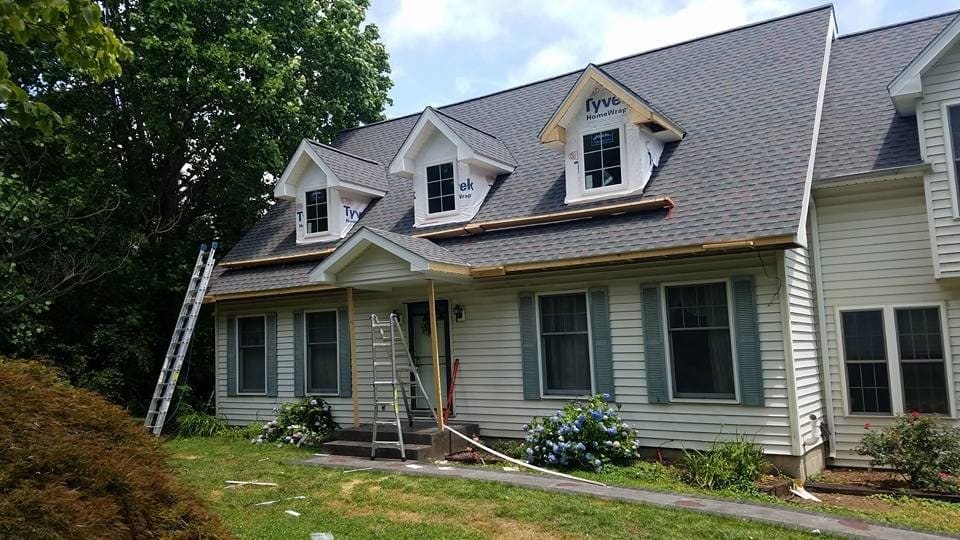
The honest answer is that most houses in Lancaster and Lebanon counties get a new asphalt shingle roof for somewhere between $9,500 and $21,000, and a metal roof for roughly double that. The rest of this article is about why the range is that wide, which end your house is likely to land on, and how to read the estimates you get so you are comparing the same thing.
I am a roofer, so I have a bias toward doing it right. But I also write a lot of estimates and I see what other contractors quote, so the numbers here are what people actually pay around here in 2026, not what a national cost website says.
The short version
| House | Asphalt shingles | Ribbed metal | Standing seam |
|---|---|---|---|
| Ranch, 16 to 20 squares | $9,000 to $13,500 | $18,000 to $26,000 | $26,000 to $34,000 |
| Cape Cod with dormers, 18 to 24 squares | $11,000 to $17,000 | $20,000 to $30,000 | $28,000 to $40,000 |
| Two-story colonial, 24 to 34 squares | $14,000 to $21,000 | $24,000 to $38,000 | $34,000 to $50,000 |
A square is 100 square feet of roof surface. A 1,800 square foot ranch usually has about 20 squares of roof once you count the overhangs and the pitch. Those prices include tearing off the old roof, hauling it away, new underlayment, ice and water shield, flashing, a ridge vent and cleanup. They do not include replacing rotted decking, which I will get to.
What you are paying for
Roughly speaking, a shingle roof price is 40 percent materials, 45 percent labor, and 15 percent everything else: the dumpster, the permit if one is needed, insurance, the truck, the fuel. Metal flips that toward materials, because the panels and trim cost more than shingles and go on faster per square once the layout is done.
The materials on a proper shingle roof are more than shingles. In order from the deck up: ice and water shield along the eaves and in the valleys, synthetic underlayment over the rest, drip edge, starter strip, the shingles, step flashing at every wall, new pipe boots, ridge vent and ridge cap. On my estimates every one of those is a line, with the brand named. If an estimate you get just says "install new roof" for one number, ask what is in it.
What pushes a roof toward the top of the range
Pitch. A 4-in-12 ranch roof is a place you can stand and work. A 10-in-12 colonial roof needs roof jacks, staging and more time for every square. Steep roofs cost 15 to 30 percent more in labor.
Complexity. Every dormer, valley, chimney, skylight and change of direction is flashing work and cut shingles. A Cape Cod with two dormers has four valleys and a lot of step flashing. A plain gable ranch has none. Same square footage, different day.
Layers. If there are two layers of shingles up there, both come off, and the second one is often stuck to the first. That is more labor and a heavier dumpster. If the house has slate under the shingles, which is common in the older parts of Ephrata, Lititz and Lebanon, the tear-off is a serious job on its own and adds $1,500 to $4,000.
Decking. When the old roof comes off you find out what the wood underneath looks like. Houses from the 1970s often have thin sheathing that has sagged. Older houses have plank decking with gaps too wide for modern shingles. Any soft or rotted areas get replaced with new plywood at $90 to $130 a sheet installed. I look in the attic before I quote so this is usually not a surprise, but no one can see every square foot from below. A good estimate carries a per-sheet price so you know what it costs before it happens.
Access. If the delivery truck cannot get near the house and the dumpster has to sit on the street, everything gets carried. If there is a pool, a garden, or a landscaped bed where the debris would land, it gets tarped and protected. Those are small costs but they add up.
Ventilation. If the attic has no intake at the soffits, the ridge vent does not work. Adding soffit vents is a few hundred dollars and worth it. Some houses need a new vented soffit entirely, which is a separate job.
What pulls it toward the bottom
A one-story house with a simple gable roof, one layer to tear off, a driveway next to the house and sound decking is the cheapest roof there is. A lot of the 1960s ranches in Ephrata Township and the newer developments around Lititz and Manheim are exactly that, and they land at the bottom of the range.
Shingle choices and what they add
Architectural shingles from GAF, Owens Corning and CertainTeed are the standard. I do not install three-tab shingles; the savings are small and they are rated for less wind. Within the architectural lines there is a standard product and a premium one with a thicker mat and a longer wind warranty. Premium adds $80 to $150 per square, so $1,600 to $3,000 on a 20-square house. Worth it on exposed roofs where the wind comes across the fields. Not necessary on a sheltered roof in a neighborhood.
The manufacturers also offer an upgraded warranty when the whole system comes from one brand and is installed by a credentialed contractor. That adds $400 to $900 and extends the coverage on both materials and workmanship. Ask about it; it is a reasonable deal on a roof you plan to own for twenty years.
Metal: why it costs double and why people pay it
Ribbed metal panels cost about twice what shingles do on the same house. Standing seam is more again. The reasons people choose metal anyway: it lasts 40 to 50 years instead of 25, it sheds snow before ice dams form, it never loses granules, moss does not grow on it, and insurers often give a small discount. On a farmhouse or a rural property that you plan to keep, the math works. On a house you plan to sell in five years, it usually does not.
How to read the estimates you get
Get three if you can. Then put them side by side and check:
- Is it a full tear-off? Shingling over an old layer is cheaper and I do not do it. It hides decking problems and voids most warranties.
- Is ice and water shield listed, and where? Eaves, valleys and around penetrations is the minimum.
- Is the underlayment synthetic or felt? Synthetic is standard now.
- Are new pipe boots and step flashing included, or is the old flashing being reused? Reused flashing is the most common cause of leaks on a new roof.
- Is there a ridge vent, and does the attic have intake?
- Is decking replacement priced per sheet?
- What is the workmanship warranty, in writing, from the contractor, separate from the manufacturer's material warranty?
- Is the contractor's PA Home Improvement Contractor number on the estimate? It is required by law and it is how you check them.
If two estimates are $3,000 apart and one of them is missing half of that list, they are not $3,000 apart. They are different roofs.
Does insurance pay for a new roof?
Only if a storm damaged it. Age and wear are not covered. If you had wind or hail damage, the insurer pays for the repair or, if the damage is widespread, the replacement, minus your deductible. See the storm damage page for how that works and what not to sign when the out-of-state crews knock after a storm.
When to do it
Roofing season here runs from March to early December. Shingles need temperatures above about 40 degrees to seal. Spring and fall are the busy times; summer is fine for roofing but hot for the crew. If your roof is leaking in January, it gets a repair now and a replacement in spring.
What I would tell a neighbor
If the roof is 20 years old and you are seeing granules in the gutters, get it looked at before it leaks, because a replacement planned in October costs less than one forced in February. Get an estimate that names every material. Check the contractor's registration. And do not let anyone shingle over the old roof.
If you want a number for your house, I will come out and look. The estimate is free and it will have everything in this article on it, line by line.