Metal roofing
Metal roof vs. shingles for a Lancaster County home
Cost, lifespan, snow, noise, resale and insurance, compared honestly by a contractor who installs both. Which one makes sense depends on the house and how long you are staying.
By Josh Fox, Fox Gables Construction · September 14, 2026 · 9 min read
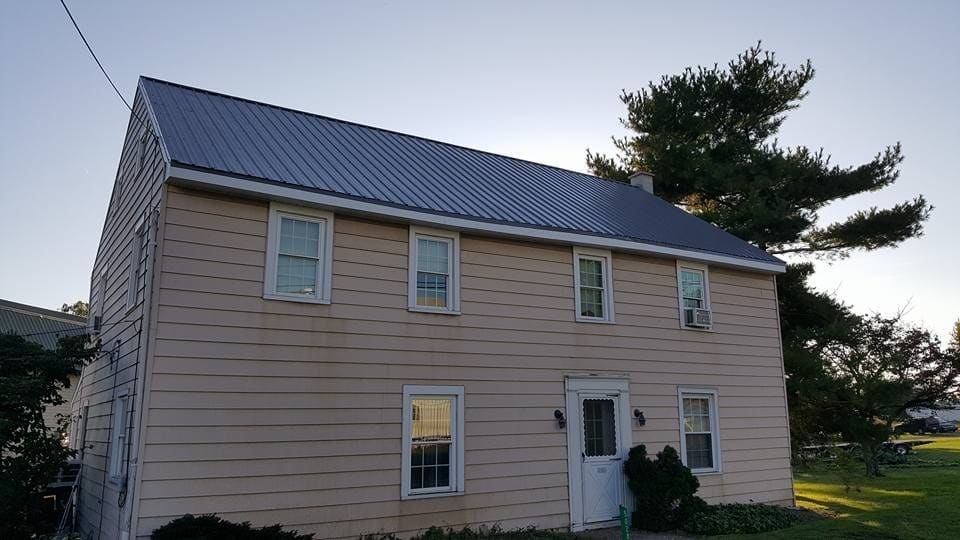
Drive any road out of Ephrata or Lititz and you will see both: shingle roofs on the houses in the developments, metal on the farmhouses and every barn. For a long time that was the whole story, metal for farms, shingles for town. Now metal roofs are going on houses in subdivisions and shingles are going on some barns, and homeowners ask me which one they should get.
I install both. Here is the comparison I give at the kitchen table, with the numbers for this area.
Cost, up front
| Roof | Installed cost per square | Typical 20-square house |
|---|---|---|
| Architectural asphalt shingles | $450 to $650 | $9,000 to $13,000 |
| Ribbed metal panels (exposed fastener) | $750 to $1,100 | $15,000 to $22,000 |
| Standing seam metal (hidden fastener) | $1,000 to $1,500 | $20,000 to $30,000 |
Ribbed metal costs roughly 1.7 to 2 times what shingles cost. Standing seam is 2 to 2.5 times. Those are 2026 prices in Lancaster and Lebanon counties, and they include tear-off, underlayment, flashing and trim.
Cost, over time
A shingle roof here lasts 25 to 30 years if it was installed right and the attic is ventilated. A ribbed metal roof lasts 40 to 50, with the fasteners replaced once around year 20 to 25 because the rubber washers age. Standing seam lasts 50 years and more with nothing to do.
Over a 50-year span, that is two shingle roofs, or one metal roof plus a fastener job. Two shingle roofs at today's prices is $18,000 to $26,000, and the second one will cost more than the first because prices go up. One ribbed metal roof is $15,000 to $22,000 plus $1,500 to $3,000 for fasteners. On the long view, metal is cheaper. On the short view, which is the only view that matters if you are selling in five years, shingles are cheaper.
Snow and ice
This is where metal earns its place in Pennsylvania. Snow slides off a metal roof. On a shingle roof it sits, melts from the heat of the house, runs down and refreezes at the cold eave, and you get an ice dam that backs water up under the shingles. Ice dams are the number one cause of the ceiling stains people call me about in February.
A properly built shingle roof defends against this with ice and water shield at the eaves and good attic ventilation, and that works. Metal just does not have the problem in the first place. The trade-off is that sliding snow has to go somewhere: metal roofs need snow guards above doors, walkways, lower roofs and anywhere a sheet of snow coming off the roof would hurt something.
Wind
Lancaster County is open country and the wind gets a run at a roof. Shingles rated for 130 mph and nailed with six nails per shingle hold fine. Metal panels fastened at the right spacing hold better. After a big wind event I get calls about blown shingles; I do not get calls about blown metal panels unless something was installed wrong.
Noise
People remember rain on the tin roof of a barn or a camp and worry. A metal roof on a house goes over a solid wood deck, on underlayment, over an insulated attic. Rain on it sounds about like rain on shingles. The loud metal roof is one on open purlins with nothing under it, which is not how a house roof is built.
Looks
Architectural shingles look like what everyone expects a roof to look like, in a lot of colors. Ribbed metal looks agricultural, which is right on a farmhouse and a stretch on a colonial in a development. Standing seam, with its narrow panels and clean vertical seams, looks architectural and works on almost any house, and it is what people mean when they say they want a "modern" metal roof.
Color choices are wider on metal than people expect: charcoal, black, bronze, slate grey, forest green, burgundy, barn red, white, and bare galvalume. Charcoal and dark bronze go on most houses because they suit brick and light siding.
Weight and structure
Metal is lighter than shingles. A metal roof is roughly 1 to 1.5 pounds per square foot; architectural shingles are 3 to 4. Any roof that carried shingles will carry metal. Some manufacturers allow metal over one existing layer of shingles on furring strips, which saves the tear-off. I usually recommend a tear-off anyway so the deck can be inspected and the underlayment is new, but on a tight budget it is an option worth pricing.
Insurance and resale
Several insurers offer a discount for a metal roof because of its fire and hail rating. It is not huge, a few percent, but ask your agent. On resale, a newer roof of either kind helps. Appraisers in this area are used to metal and do not penalize it. A standing seam roof on a nice house is a selling point; a ribbed roof on a colonial in a subdivision can look out of place, so match the roof to the house.
Repairs
Shingle repairs are simple and any roofer can do them. Metal repairs are also simple, loose fasteners, failed sealant, a bent trim piece, but fewer roofers are comfortable with them and matching a panel color years later can be harder than matching a shingle. If a tree comes through a metal roof, the panels on that run get replaced; it is not worse than a shingle roof, just different.
Which one for which house
Metal makes sense when: you plan to own the house a long time; the roof is simple enough that the panel layout is clean; it is a farmhouse, a rural property or an outbuilding; ice dams have been a problem; or you just want to do the roof once.
Shingles make sense when: you are likely to sell within ten years; the roof is complicated with a lot of dormers, hips and valleys that would make metal expensive; the house is in a development where every other roof is shingle; or the budget is the budget.
Standing seam specifically is the answer on low-slope porch roofs and sunroom roofs where shingles would leak, and on houses where the look of the roof matters.
What I tell people
Half the houses I quote get shingles and that is the right call. The farmhouses, the rural properties, the houses whose owners say "we are never moving," and anything under a 3-in-12 pitch get metal. If you are in between, get both numbers. I will write the estimate both ways so you can see the difference for your actual roof, and the look is free.